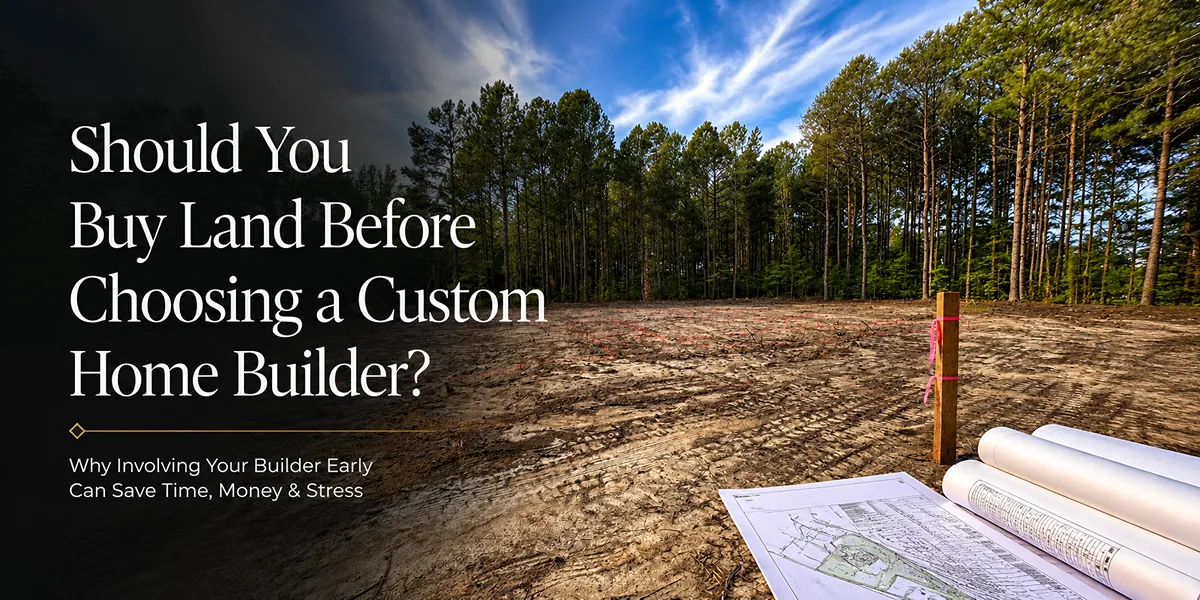
Should You Buy Land Before Choosing a Custom Home Builder?
Why Involving Your Builder Early Can Save You Time, Money, and Stress
One of the first questions many prospective homeowners ask is whether they should purchase land before contacting a custom home builder. It seems like the logical first step—you find the perfect property, buy it, and then hire a builder to bring your vision to life.
In reality, the process often works better the other way around.
While it's certainly possible to purchase land first, involving your builder early can help you avoid unexpected costs, identify potential challenges, and determine whether a property is truly suited for the home you want to build.
Every homesite is different. A beautiful wooded lot may require extensive grading. A rural property could need an engineered septic system. A seemingly perfect parcel might have setbacks that limit where your home can actually be built.
These aren't problems that should be discovered after closing.
At Branch Building & Design, we encourage homeowners throughout Wake County and the Triangle to involve their builder as early as possible. Doing so provides valuable insight before making one of the biggest purchases of the entire project.
In this guide, we'll explain the advantages of involving a builder before buying land, what makes a great homesite, and the questions every buyer should ask before signing on the dotted line.
Is It Better to Buy Land First?
The short answer is...
Not always.
Many homeowners begin their search by looking at available lots online. They fall in love with the views, the location, or the amount of acreage and assume the property will be ideal for building.
Unfortunately, that's not always the case.
Just because land is available doesn't necessarily mean it's ready or affordable to build on.
An experienced custom home builder sees things that most buyers simply can't. They understand how grading, drainage, utilities, soil conditions, and local building regulations can dramatically influence both the cost of construction and the design of your future home.
That doesn't mean you shouldn't look for land on your own. In fact, many of our clients do exactly that. The difference is involving your builder before making a final purchase so potential challenges can be identified early.
A short site visit today can prevent expensive surprises tomorrow.
The Benefits of Choosing Your Builder Before Buying Land
Working with a builder early in the process provides much more than construction expertise. It gives you a trusted partner who can evaluate a property's potential through the eyes of someone who builds homes every day.
Some of the biggest advantages include:
Understanding the True Cost of the Property
The purchase price is only one part of your investment.
Two lots may have the same asking price, but one could require significantly more site preparation than the other.
Additional grading, retaining walls, long driveways, utility extensions, tree removal, or specialized septic systems can all add to the overall cost of your project.
Evaluating these factors before purchasing the property allows you to make a more informed financial decision.
Designing Around the Property
The best custom homes don't fight the land—they embrace it.
An experienced builder can help you identify the ideal location for your home based on natural features such as views, sunlight, topography, privacy, and outdoor living opportunities.
Rather than forcing a standard floor plan onto the property, your builder can begin thinking about how the home's design can take advantage of the site's unique characteristics.
This often leads to a better home and a better overall building experience.
Identifying Potential Challenges Early
Some building challenges are obvious.
Others aren't.
A property may appear perfectly level while hiding drainage concerns beneath the surface. Utility access may be farther away than expected. Soil conditions may require additional engineering before construction can begin.
Discovering these issues before purchasing the property gives you the opportunity to evaluate whether the investment still aligns with your goals and budget.
Creating a More Accurate Budget
One of the biggest advantages of involving your builder early is developing a realistic understanding of your total project cost.
Instead of budgeting only for the home itself, you'll also gain insight into:
-
- Site preparation
- Utility connections
- Driveway construction
- Well and septic systems
- Grading requirements
- Tree clearing
- Retaining walls
- Drainage improvements
Understanding these costs upfront allows you to make informed decisions and helps reduce the likelihood of unexpected expenses later in the project.
What Makes a Great Homesite?
There's no such thing as the perfect lot.
Instead, the best property is one that supports the type of home you want to build while fitting comfortably within your overall budget.
When evaluating land, there are several characteristics worth considering.
Location
While every family has different priorities, location remains one of the most important factors.
Consider:
-
- Proximity to work
- School districts
- Commute times
- Nearby amenities
- Future community growth
- Privacy
- Neighborhood character
Unlike the home itself, location can't be changed later.
Choosing an area that supports both your current lifestyle and future plans is one of the best long-term investments you can make.
Topography
The slope and shape of a property influence far more than curb appeal.
They can affect:
-
- Foundation design
- Drainage
- Excavation costs
- Outdoor living spaces
- Driveway placement
- Construction complexity
A gently sloping lot may provide beautiful views and opportunities for walk-out living spaces, while steep terrain may require additional grading or retaining walls.
Neither is necessarily better they simply require different planning.
Sunlight & Orientation
Many homeowners overlook how the position of the home affects everyday comfort.
Thoughtful placement can improve:
-
- Natural lighting
- Energy efficiency
- Outdoor entertaining
- Backyard usability
- Seasonal comfort
Large rear windows overlooking a wooded property, morning sunlight in the kitchen, or a shaded outdoor living area can all influence how enjoyable your home feels throughout the year.
Designing around these factors early often results in a home that feels brighter, more comfortable, and better connected to its surroundings.
Utilities: Looking Beyond the Property Line
One of the easiest mistakes to make when evaluating land is assuming that utilities are readily available simply because neighboring homes have them.
In reality, utility availability can vary significantly from one property to the next. Understanding what's already available—and what will need to be installed—is an important part of evaluating the true cost of building.
Depending on the location of your property, your project may require:
-
- Public water connection
- Well installation
- Public sewer connection
- Septic system
- Electrical service
- Natural gas or propane
- Internet availability
Connecting to existing utilities is often more straightforward than extending services over long distances. For rural properties, installing a well and septic system may be the most practical solution, but these systems require additional planning, testing, and permitting before construction can begin.
Evaluating utility access before purchasing land helps you understand both the feasibility of your project and the investment required to prepare the property for construction.
Soil Conditions Matter More Than Most Buyers Realize
Beautiful trees, open fields, and scenic views may catch your attention first, but what's beneath the ground is just as important as what's above it.
The soil on your property directly affects how your home is built. Everything from the foundation to the septic system depends on understanding the site's soil conditions before construction begins.
Depending on the property, soil testing may reveal the need for:
-
- Additional excavation
- Engineered foundations
- Specialized drainage solutions
- Imported fill material
- Engineered septic systems
- Additional grading
These aren't necessarily deal breakers. They're simply factors that should be identified before purchasing the property so they can be incorporated into your planning and budget.
A thorough site evaluation gives you confidence that your future home can be built safely while minimizing unexpected construction costs.
Septic Systems Aren't One-Size-Fits-All
Many rural homes throughout North Carolina rely on septic systems rather than municipal sewer connections. While conventional septic systems work well for many properties, not every lot has the soil conditions necessary to support one.
If the soil doesn't "perc" properly, additional engineering may be required before construction can begin.
For example, one of our custom home projects in Apex required an engineered mound septic system because the existing soil conditions weren't suitable for a traditional septic installation. Preparing the property involved additional clearing along with importing several hundred tons of engineered soil and sand to create a properly functioning septic field.
While this added another layer of planning to the project, identifying the issue before construction allowed us to develop the appropriate solution and keep the project moving forward with confidence.
This is one of the many reasons we encourage homeowners to involve their builder before purchasing land. Site conditions like these aren't always visible during a casual property tour, but they can have a meaningful impact on both your construction timeline and your overall budget.
Common Mistakes Buyers Make When Purchasing Land
Buying land is exciting, but it's also easy to focus on the features you can see while overlooking the factors that influence the cost and complexity of building.
Here are some of the most common mistakes we see.
Falling in Love With the View
A beautiful homesite can certainly inspire your dream home, but scenic views don't always translate into an easy build.
Steep slopes, extensive grading, difficult access, or challenging foundation conditions can all increase construction costs. It's important to balance the property's beauty with its practicality.
Assuming Every Lot Is Build-Ready
Just because a parcel is listed for sale doesn't mean it's ready for construction.
Additional engineering, permits, utility extensions, or environmental considerations may still be required before work can begin.
Having a builder review the property early helps identify these requirements before they become unexpected expenses.
Forgetting About Site Preparation
Many buyers budget for the house itself but underestimate the cost of preparing the land.
Depending on the property, site preparation may include:
-
- Clearing trees
- Grading
- Driveway installation
- Utility connections
- Drainage improvements
- Well drilling
- Septic installation
These costs vary considerably from one property to another, making it important to evaluate them before finalizing your purchase.
Not Thinking About the Home's Placement
A lot may have enough space for your dream home, but that doesn't necessarily mean every floor plan will fit.
Building setbacks, easements, topography, mature trees, and driveway access all influence where the home can actually be positioned on the property.
By involving your builder early, you gain valuable insight into how your future home can be oriented to maximize natural light, privacy, views, and outdoor living opportunities while remaining compliant with local requirements.
Thoughtful planning at this stage often results in a home that feels intentionally designed for the property rather than simply placed on it.
Questions to Ask Before Purchasing Land
Before making an offer on a property, it's worth taking the time to gather as much information as possible. Asking the right questions early can help prevent unexpected surprises later.
Some important questions include:
-
- Has the property been professionally surveyed?
- Are water and sewer available, or will a well and septic system be required?
- Has a soil evaluation or perc test been completed?
- Are there any easements or deed restrictions?
- What are the building setbacks?
- Does the property require significant grading?
- Is there adequate road access for construction equipment?
- Are utilities readily available?
- Are there any floodplain or drainage concerns?
- Will the homesite accommodate the style and size of home you want to build?
The answers to these questions provide valuable insight into both the feasibility of your project and the investment required to prepare the property for construction.
Why Working With Your Builder Early Makes a Difference
Building a custom home on your own lot is about much more than construction. It's a process of making informed decisions, solving challenges before they become problems, and creating a home that's designed specifically for your family and your property.
That's why we believe one of the most valuable decisions you can make is choosing your builder before purchasing land.
At Branch Building & Design, we're happy to meet with prospective homeowners early in the planning process. Whether you've already found a property or are still exploring available lots throughout Wake County and the Triangle, we can help you evaluate the site's potential and identify factors that may influence your home's design, budget, and construction timeline.
Our goal isn't to sell you on a particular property. It's to give you the information you need to make a confident, informed decision.
By involving your builder early, you'll gain a better understanding of:
-
- The property's buildability
- Potential site preparation requirements
- Utility availability
- Soil and drainage considerations
- The best location for your future home
- Preliminary construction budgeting
That guidance can save both time and money while helping you avoid unexpected surprises after closing.
Finding the Right Property Is About More Than Location
It's easy to focus on the neighborhood, acreage, or beautiful views when searching for land, but the best homesites balance location with practicality.
A property that supports your vision, fits your budget, and complements your home's design will almost always lead to a smoother building experience than one selected on appearance alone.
The right lot doesn't need to be perfect.
It simply needs to be understood.
When you know what challenges exist—and have an experienced builder helping you plan for them—you can move forward with confidence, knowing your investment is based on realistic expectations rather than assumptions.
That's one of the biggest advantages of working with a custom home builder from the very beginning.
Frequently Asked Questions
Should I buy land before hiring a custom home builder?
Not necessarily. While many homeowners purchase land first, involving your builder before closing on a property allows potential challenges to be identified early. Site conditions, utilities, grading, zoning, and septic requirements can all influence your project's cost and feasibility.
Can a builder help me evaluate a property before I buy it?
Yes. Many custom builders, including Branch Building & Design, can walk the property with you, discuss potential building locations, identify site considerations, and help determine whether the lot is a good fit for your future home.
Can any piece of land be built on?
Not always. Some properties may require additional engineering, specialized foundations, extensive grading, engineered septic systems, or utility extensions before construction can begin. A professional site evaluation helps determine what's required.
What should I look for when buying land?
Important considerations include location, topography, utility availability, soil conditions, drainage, zoning, building setbacks, road access, and how well the property supports the type of home you want to build.
How do I know if a property will need a septic system?
If public sewer service isn't available, the property will typically require a septic system. Soil testing and local health department requirements determine whether a conventional system is appropriate or if an engineered solution is needed.
Can site conditions affect my construction budget?
Absolutely. Grading, tree removal, drainage improvements, utility installation, well drilling, septic systems, retaining walls, and other site-specific requirements all contribute to the overall cost of building a custom home.
Ready to Start Looking for Land?
Whether you've already found the perfect property or are just beginning your search, having an experienced builder involved early can make the entire process more predictable and less stressful.
At Branch Building & Design, we work with homeowners throughout Wake County and the Triangle to evaluate homesites, answer questions, and provide honest guidance before construction ever begins. From reviewing potential lots to designing a home that fits your property and your lifestyle, we're here to help you make informed decisions every step of the way.
If you're considering building a custom home, we'd love the opportunity to learn about your goals and help you take the next step with confidence.
Ready to get started? Contact Branch Building & Design today to schedule your consultation.